
Our Treatment Approach
Rehabilitation at The Physio Clinic follows a consistent process: understand carefully, plan individually, monitor closely and progress appropriately.
Treatment is not fixed on day one—it evolves as pain, movement, strength and function change.
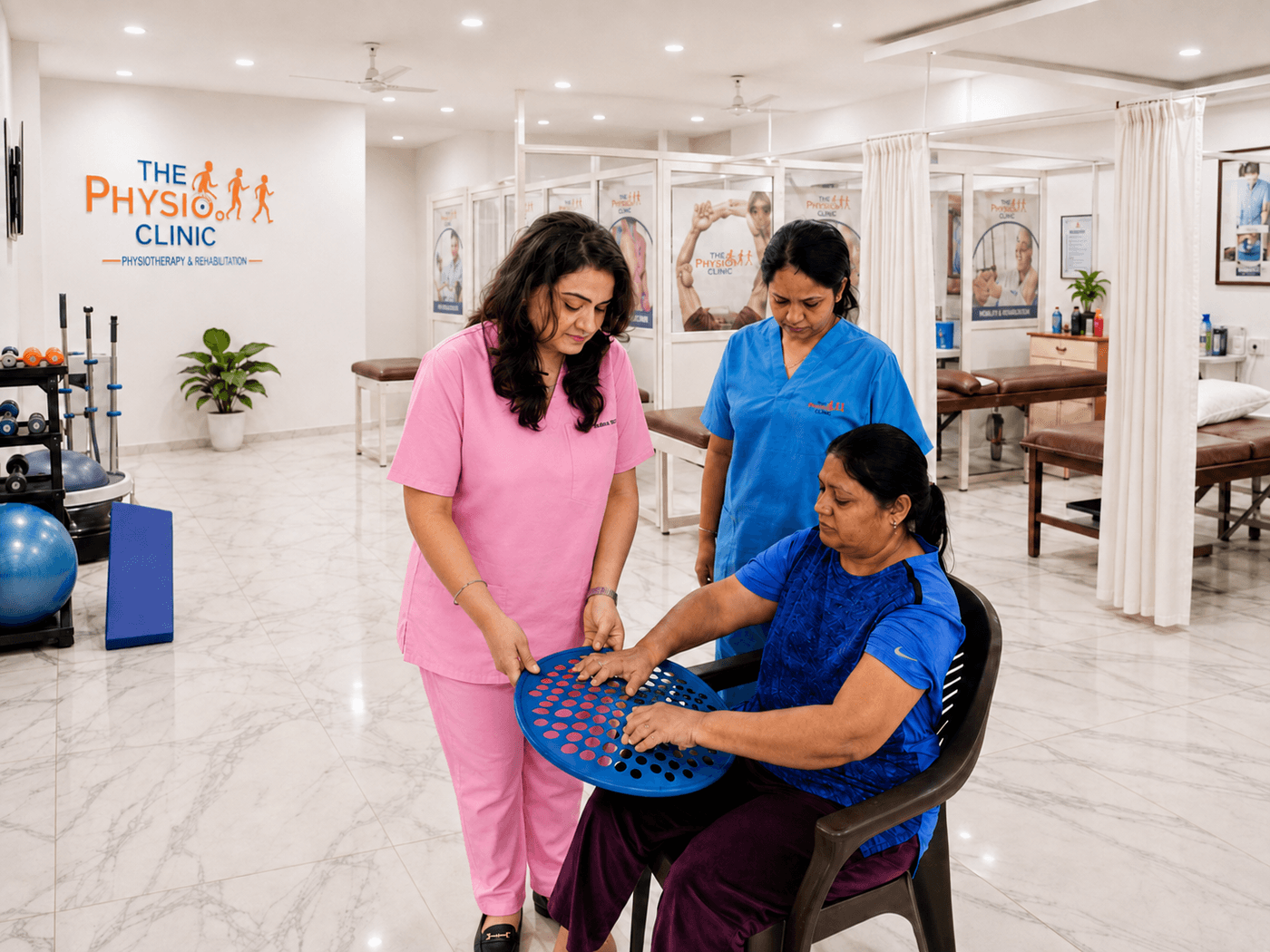
What You Can Expect
- A detailed personal assessment by Dr. Anshika Mitra (PT)
- A plan shaped around your symptoms, goals and daily activities
- Close supervision during sessions with progression when you are ready
- Honest guidance when something needs to change in the plan

Structured Enough to Guide Recovery. Personal Enough to Adapt.
Whether you are managing persistent pain, recovering after surgery or working on balance and mobility, the same principles apply.
The focus remains on meaningful functional progress—not simply repeating the same exercises regardless of response.
Professional Rehabilitation Should Never Feel Impersonal
Whether you are recovering from pain, surgery, neurological change or mobility limitation, you deserve rehabilitation that feels attentive, structured and responsive.
Personally Assessed. Closely Monitored. Progressively Adapted.
Physiotherapy Should Evolve With Your Recovery
Two people may have the same diagnosis yet experience very different symptoms, movement limitations, physical capacities and recovery goals.
That is why rehabilitation at The Physio Clinic does not begin with the assumption that every patient requires the same treatment routine.
Every new patient is personally assessed by Dr. Anshika Mitra (PT), after which rehabilitation is planned and progressed according to the individual's clinical needs.
1. Assessment Comes First
The Diagnosis Is Important—but It Is Only One Part of the Picture.
Depending on the patient's concern, assessment may consider:
Symptoms and relevant clinical history
Movement and joint mobility
Walking and functional ability
Activities that aggravate symptoms
Work, exercise and everyday demands
Previous treatment response
Relevant medical reports, scans, surgical instructions or precautions may also be considered where appropriate.
The aim is to understand not only what the condition is, but how it is affecting this particular patient.
2. A Plan Built Around the Patient
Following assessment, rehabilitation is planned according to the patient's needs and stage of recovery.
Depending on the condition, this may involve an appropriate combination of:
Guided therapeutic exercise
Mobility and flexibility work
Progressive strengthening
Balance and coordination training
Walking and gait rehabilitation
Manual therapy where clinically appropriate
Symptom-relief techniques where useful
Functional activity progression
Home exercise and activity guidance
Not every patient needs every intervention.
The aim is to use what is appropriate for that patient, at that stage of recovery.
3. How Rehabilitation Progresses
Assess → Plan → Monitor → Adapt → Progress
Understand the problem and its effect on movement and function.
Identify appropriate rehabilitation priorities.
Observe how the patient is responding.
Modify or progress rehabilitation when needs change.
Work towards meaningful functional goals.
4. If Progress Is Slower Than Expected
We Reassess Rather Than Simply Repeat.
Recovery does not happen at the same speed for everyone.
When progress is slower than expected, relevant factors may need to be reviewed, including:
Current treatment response
Daily activities and work demands
Movement and exercise habits
Strength or mobility limitations
Rest and recovery patterns
Activities repeatedly aggravating symptoms
How the rehabilitation plan fits into everyday life
Other clinical or medical factors that may require attention
Where appropriate, treatment, exercise progression or supporting guidance may then be adjusted.
When recovery changes, the plan may need to change with it.
5. Supervised Rehabilitation
Exercises Should Be Progressed With Purpose.
Where clinically appropriate, exercises and movement progression are practised at the clinic under trained supervision.
This allows attention to:
Readiness for progression
As the patient becomes more capable and confident, appropriate exercises may also become part of the home programme.
The goal is not simply to give exercises—it is to help the patient perform the right exercise, at the right stage, in the right way.
6. Progress Towards Everyday Function
Depending on the condition, rehabilitation may gradually progress through:
Managing Symptoms → Restoring Movement → Building Strength & Control → Improving Balance, Endurance or Activity Tolerance → Returning to Everyday Activities, Work, Exercise or Sport
The sequence will differ between patients.
The destination is not simply completing treatment—it is improving meaningful function.
7. Honest Communication & Realistic Expectations
Patients should understand what rehabilitation is trying to achieve and how the journey is progressing.
We aim to communicate clearly about:
What the assessment suggests
What rehabilitation is currently focusing on
What progress is being observed
What may require more time
What the patient may do outside the clinic
When the plan or expectations may need to change
When further medical assessment may be appropriate
We do not promise guaranteed outcomes or fixed recovery timelines.
Realistic Guidance. Visible Progress. Clear Communication.
Start by Telling Us What You Are Struggling With
You do not need to know which treatment you require before contacting the clinic.
Tell us what you—or your family member—are dealing with, and the clinic will help guide you towards an appropriate next step.
Request an Assessment \| WhatsApp the Clinic \| Call the Clinic