
Personalised Physiotherapy That Adapts as You Recover
Every patient is different—and rehabilitation should respond to how you are progressing.
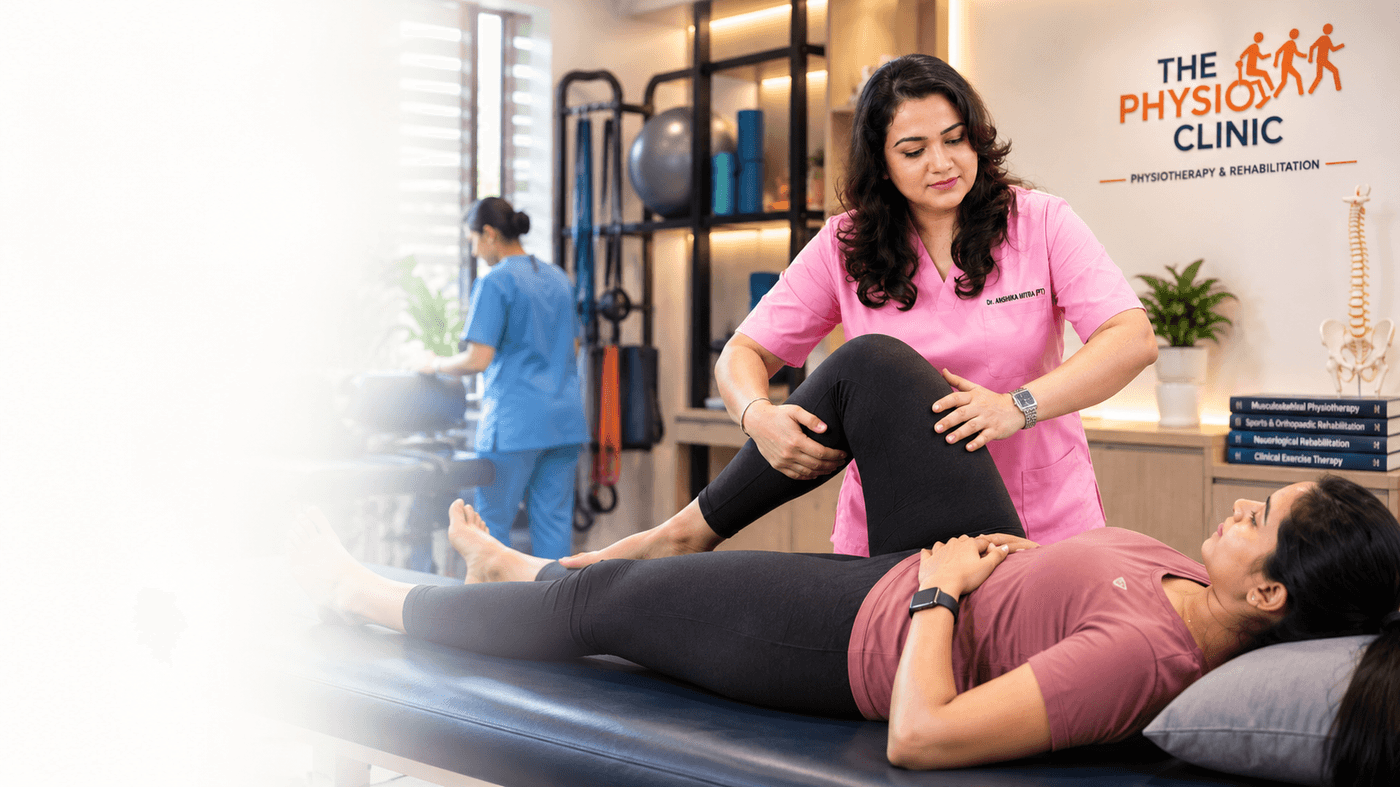
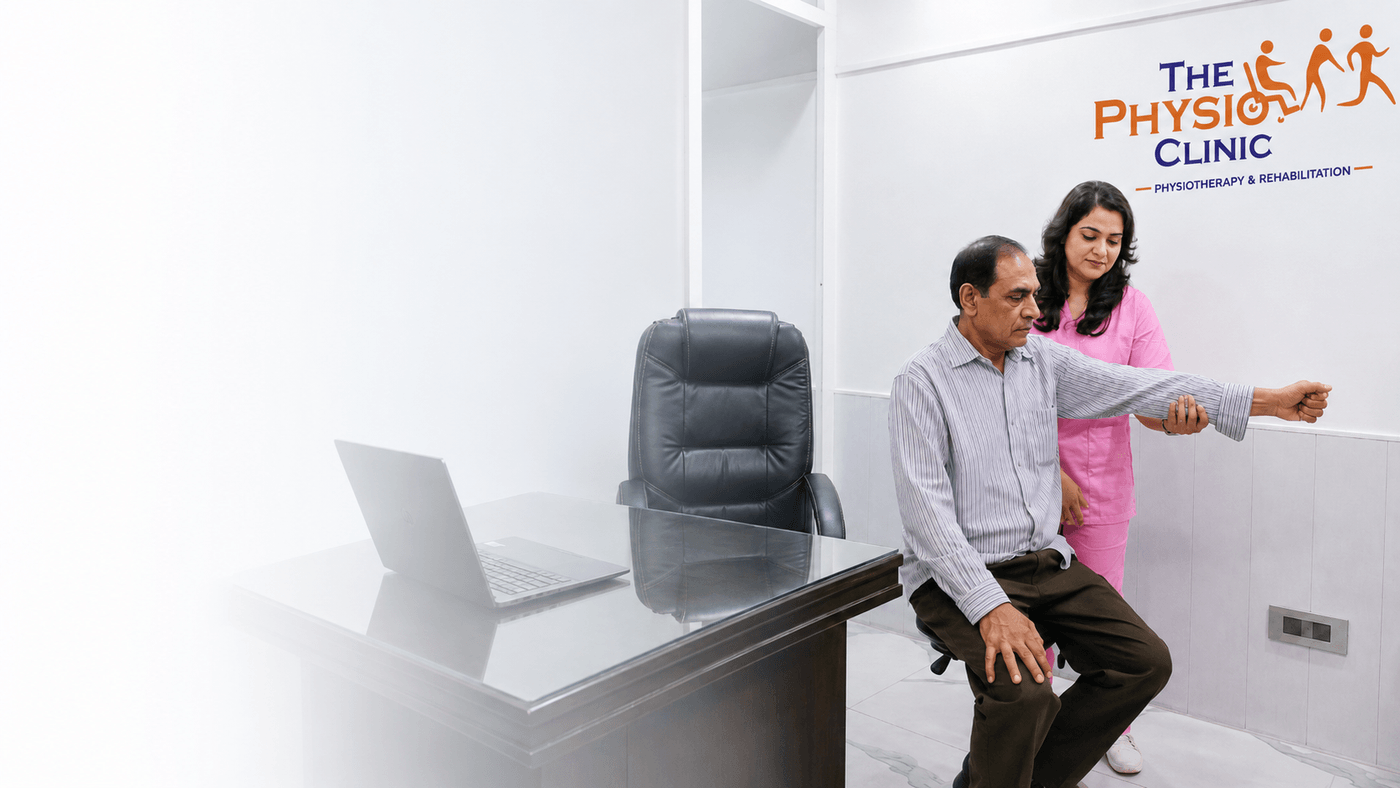
At The Physio Clinic, Rohini, every new patient is personally assessed by Dr. Anshika Mitra. She determines the treatment plan and progression, while your response is monitored throughout rehabilitation so treatment can be adapted as your pain, movement, strength and function change.
From persistent musculoskeletal problems and post-surgical recovery to neurological and mobility rehabilitation, the approach remains consistent: Understand carefully. Plan individually. Monitor closely. Progress appropriately.
What would you like help with?
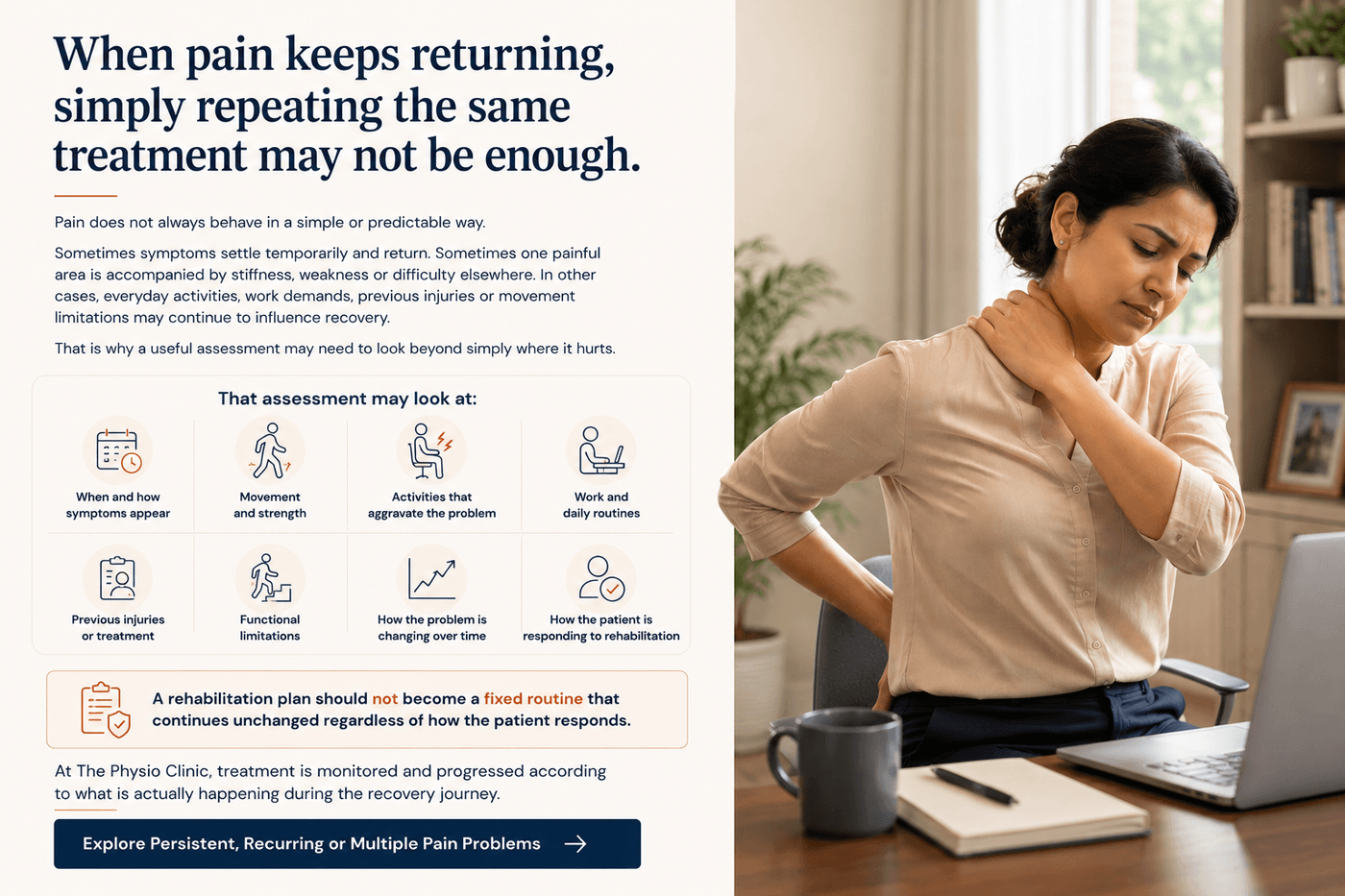
When pain keeps returning, simply repeating the same treatment may not be enough.
Pain does not always behave in a simple or predictable way. Sometimes symptoms settle temporarily and return. Sometimes one painful area is accompanied by stiffness, weakness or difficulty elsewhere.
At The Physio Clinic, treatment is monitored and progressed according to what is actually happening during the recovery journey.
Our 4-Step Approach That Evolves With You
Assess Personally
A detailed one-to-one assessment by Dr. Anshika Mitra.
Plan Individually
A personalised plan aligned with your goals and lifestyle.
Monitor Continuously
We track your progress regularly and reassess what matters.
Adapt & Progress
Your plan evolves as you improve—step by step.
Our Rehabilitation Specialties
Real Progress. Real People.
Recovery is shaped by consistent assessment, close monitoring and a plan that adapts as the patient improves.
Watch a Recovery Story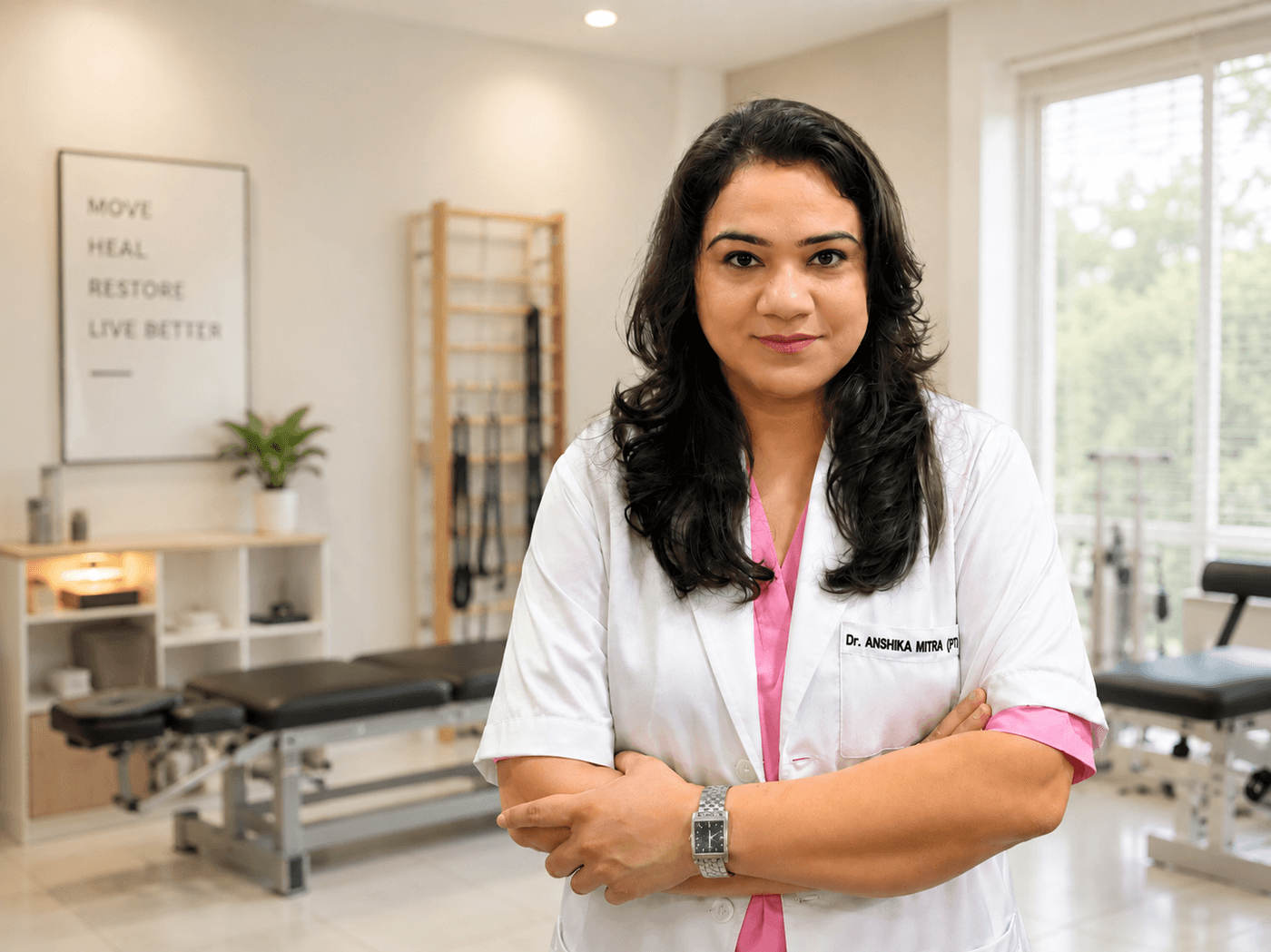
Dr. Anshika Mitra
Founder & Chief Physiotherapist
- 18 years of clinical experience
- Personal clinical oversight for every new patient
- Clear, step-by-step guidance
- Evidence-informed plans for lasting progress

We're Here for Families Who Care
We guide you with simple steps and practical support—so you feel confident and supported every step of the way.
Discover How We Support Families →What Patients and Families Say About Their Experience
Care that responds to the individual rather than moving every patient through the same routine.
Read genuine patient feedback and recovery stories on our Reviews and Patient Stories pages.
Your First Visit — What to Expect
- Personal assessment of your concern
- Understanding your symptoms & goals
- Physical examination & movement review
- A clear plan for your next steps
Visit Us in Rohini, Delhi
C-1/13, Basement, PVR Prashant Vihar Road, Prashant Vihar, Sector 14, Rohini, New Delhi, Delhi 110085
Monday–Saturday: 8:30 AM–8:00 PM | Sunday: By Appointment Only
Tell us briefly what you or your family member is struggling with. Our team will get in touch to understand the concern and guide you towards the appropriate next step.
You don't need to know the exact medical name of your problem before finding the right information. Start with what you or your family member is experiencing.
4. EDUCATIONAL / PERSISTENT PAIN SECTION
Sometimes symptoms settle temporarily and return. Sometimes one painful area is accompanied by stiffness, weakness or difficulty elsewhere. In other cases, everyday activities, work demands, previous injuries or movement limitations may continue to influence recovery.
That is why a useful assessment may need to look beyond simply where it hurts.
Depending on the problem, it may be important to understand:
When and how symptoms appear
Activities that aggravate the problem
Previous injuries or treatment
How the problem is changing over time
How the patient is responding to rehabilitation
A rehabilitation plan should not become a fixed routine that continues unchanged regardless of how the patient responds.
5. OUR TREATMENT APPROACH
Your rehabilitation should evolve as you do.
Every new patient is personally assessed by Dr. Anshika Mitra to understand symptoms, movement, strength, functional limitations, relevant medical history and recovery goals.
Dr. Anshika determines the treatment plan and progression according to the patient's clinical needs rather than applying the same routine to everyone with a similar condition.
The patient's response is reviewed throughout the rehabilitation journey. Relevant observations are discussed with the patient and treating team so that progress and difficulties remain visible.
As pain, movement, strength, tolerance and function change, rehabilitation can be modified and progressed accordingly.
Where clinically appropriate, exercises and movement progression are also practised at the clinic under trained supervision so that technique, tolerance and response can be observed before the patient is expected to manage them independently.
6. MAIN REHABILITATION SPECIALITIES
Rehabilitation for where you are—and where you want to get back to.
Persistent & Complex Musculoskeletal Problems
For recurring pain, multiple painful areas, stiffness, weakness or incomplete recovery despite previous treatment.
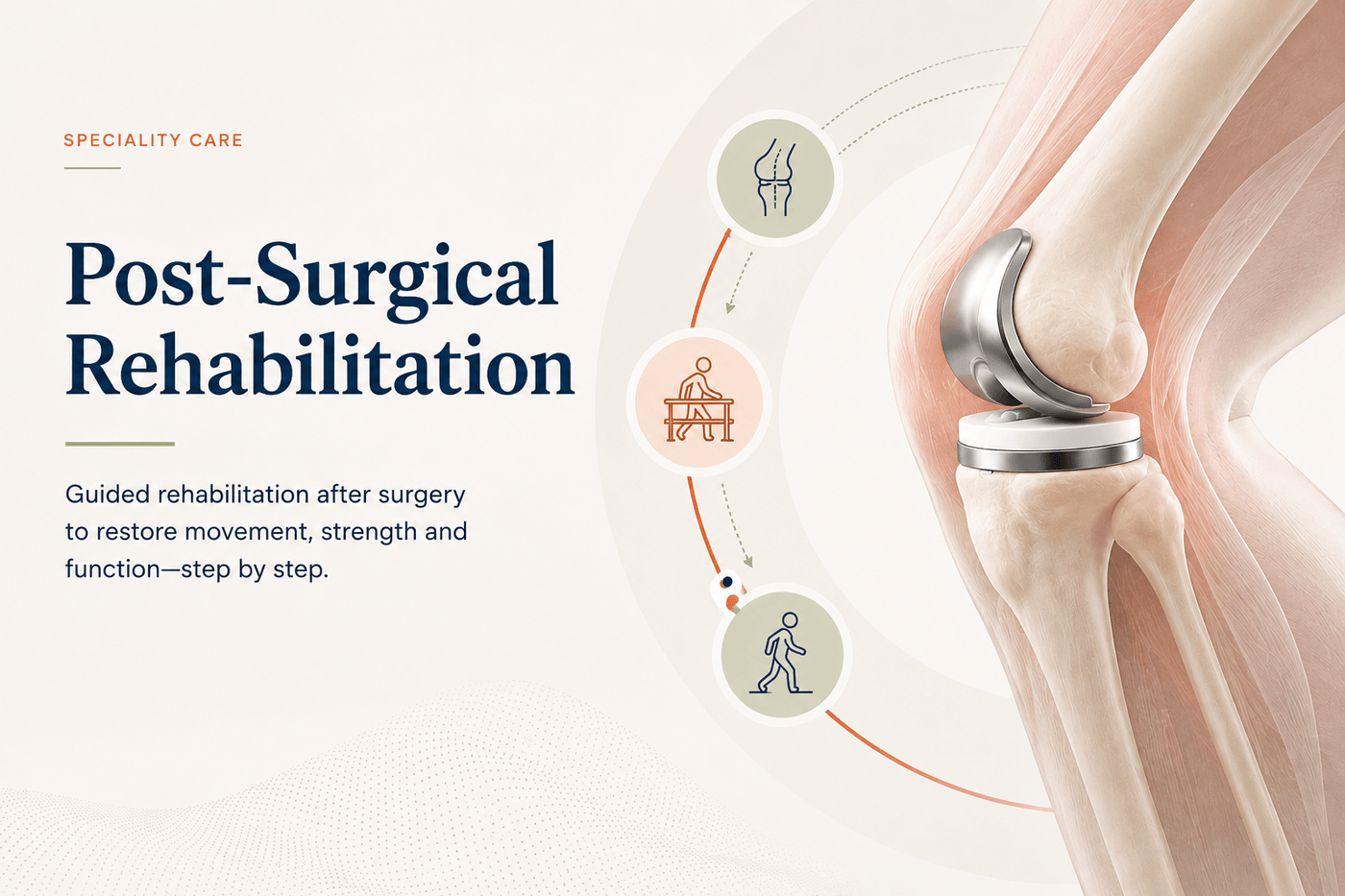
Progressive rehabilitation after orthopaedic surgery, guided by surgical precautions, functional milestones and individual recovery.
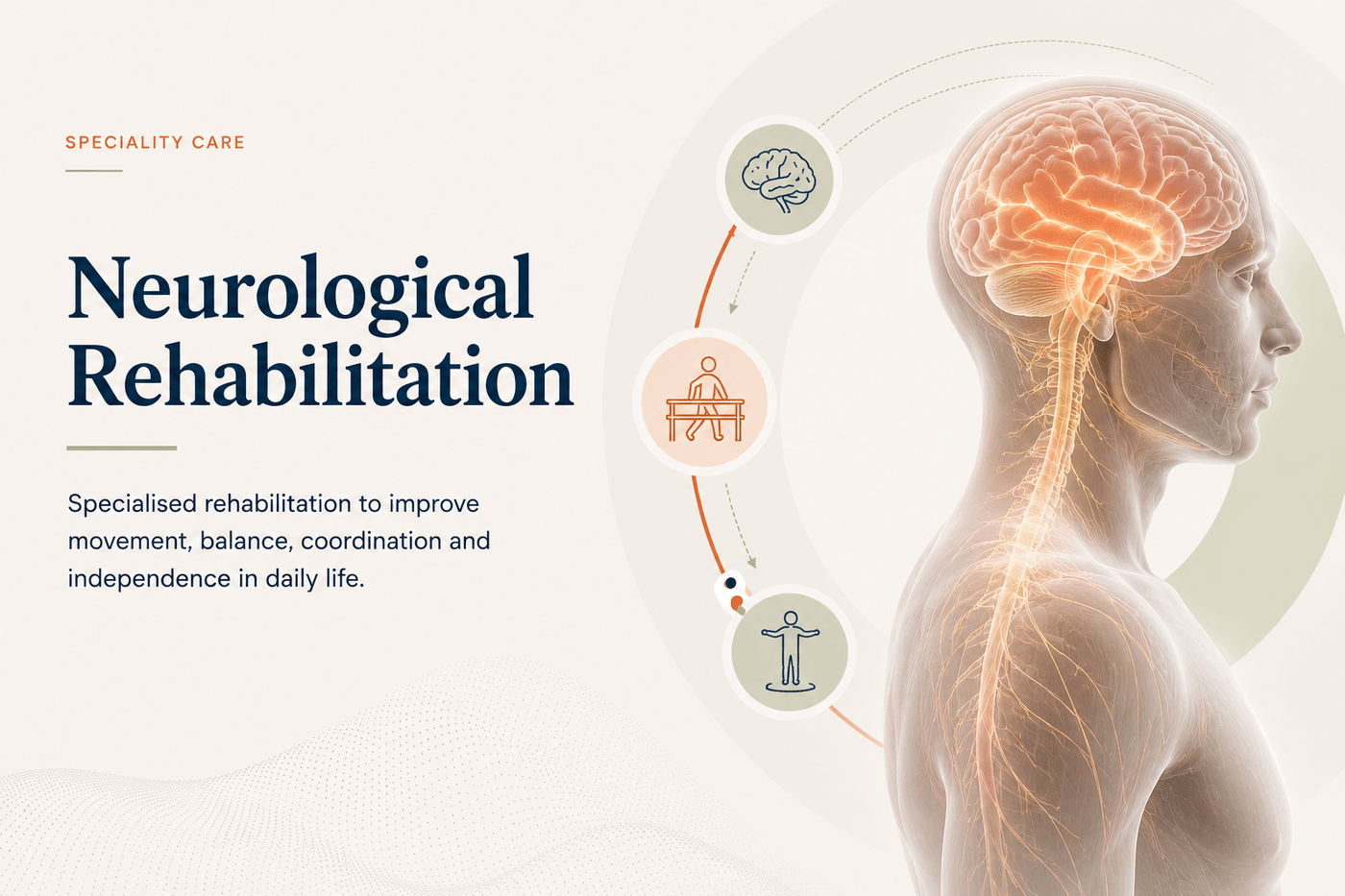
Structured rehabilitation for movement, balance, coordination, walking and functional limitations associated with neurological conditions.
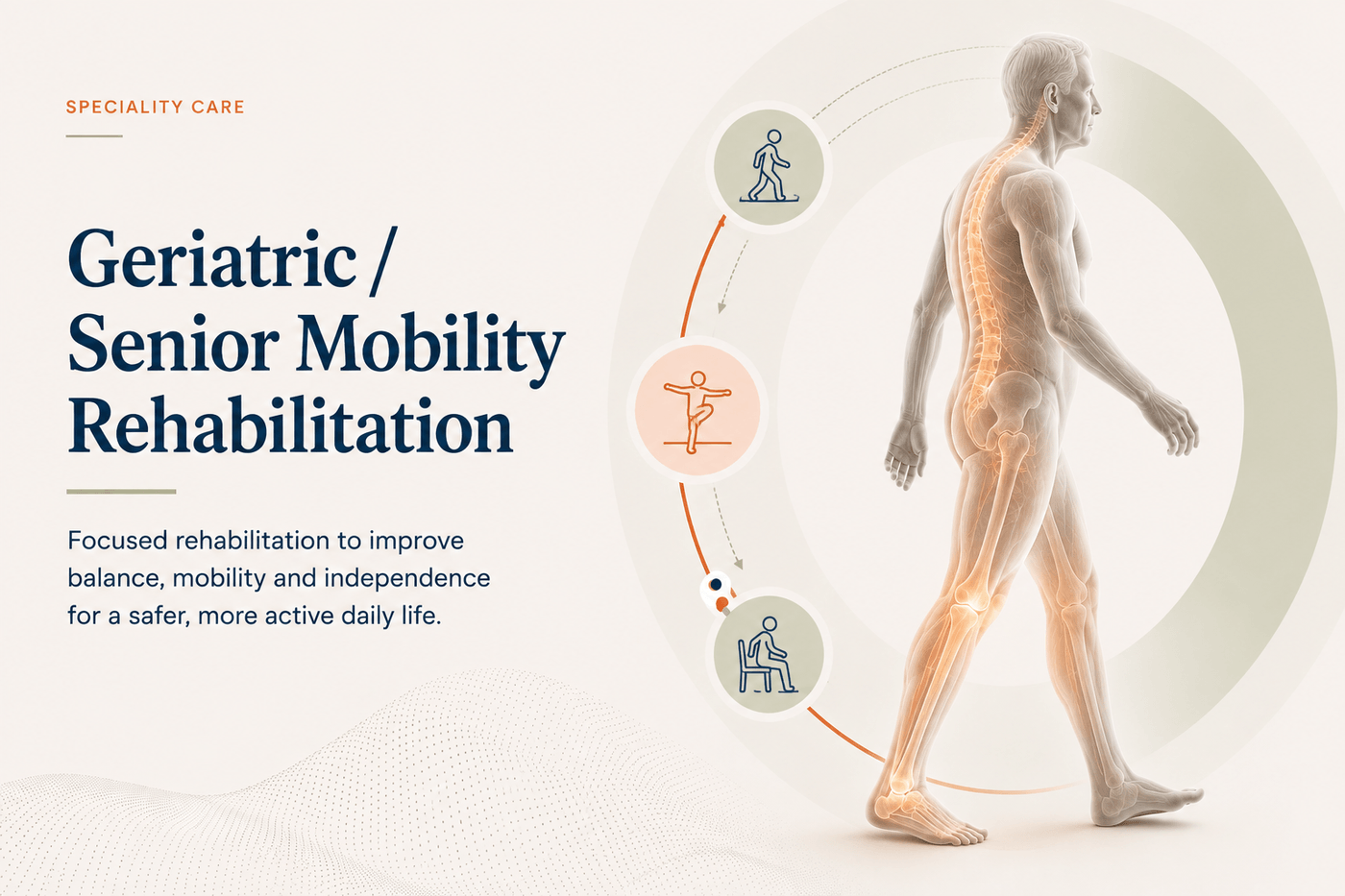
Helping older adults work towards better strength, balance, walking confidence and independence in everyday activities.
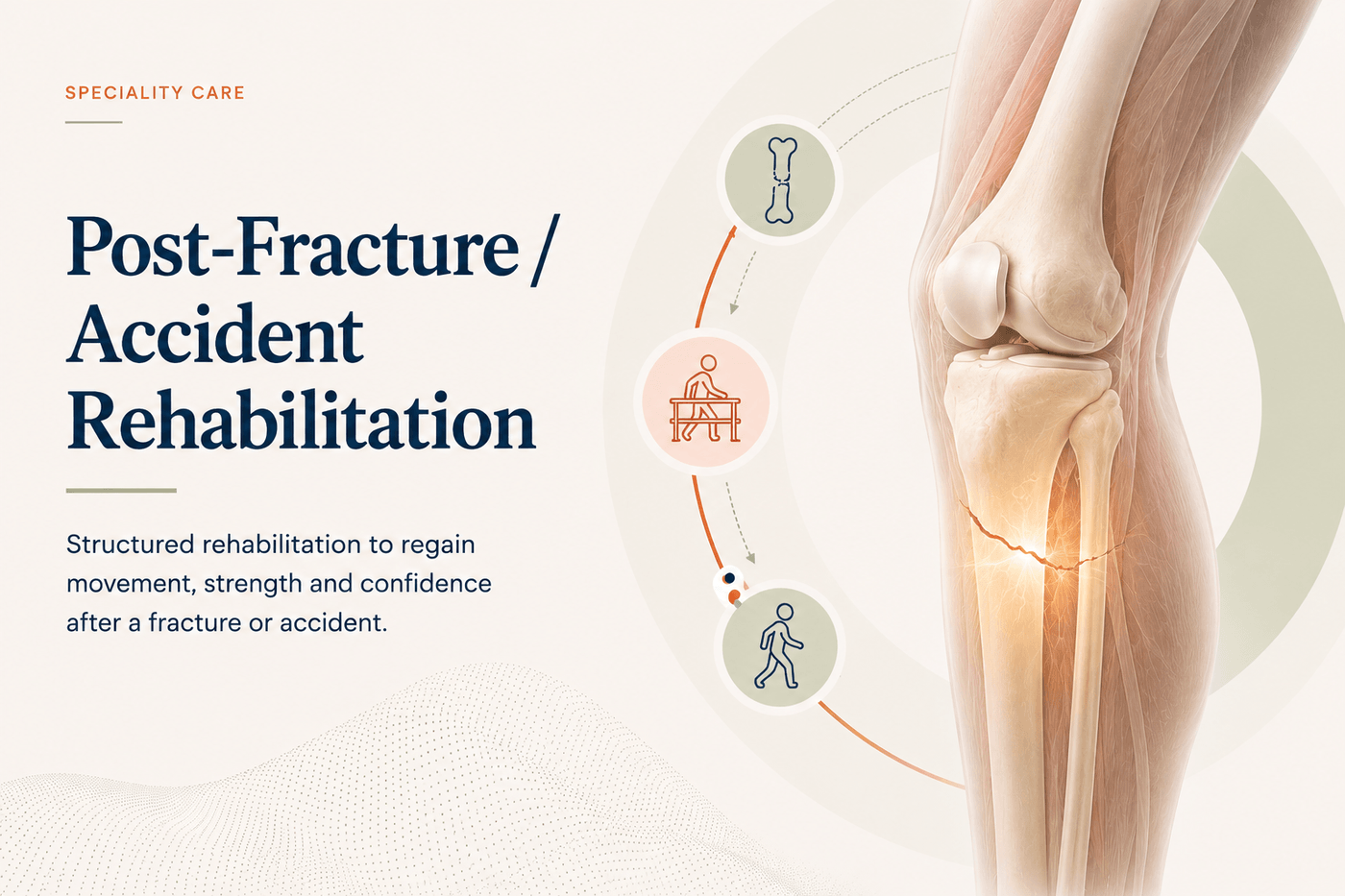
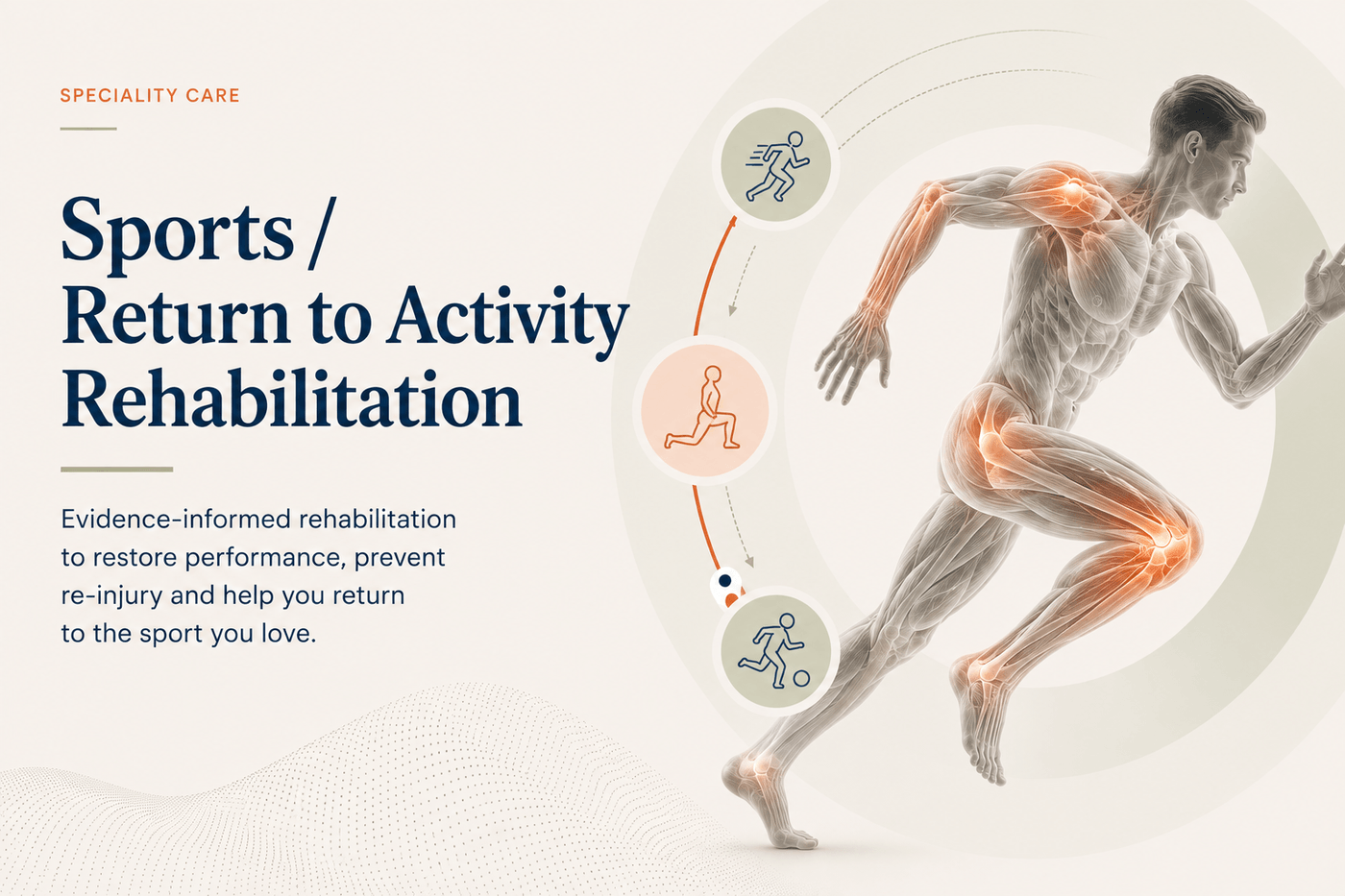
Progressive rehabilitation focused on restoring movement, strength and confidence for a safe return to exercise, sport and everyday activity.
7. FEATURED PATIENT RECOVERY JOURNEY
Real Progress. Real Recovery Journeys.
Recovery does not always happen in one dramatic leap.
Progress may first appear as:
A movement becoming easier
Less assistance while walking
Returning to an everyday activity that had become difficult
These smaller gains can become important steps towards larger functional goals.
\[Insert strongest approved patient recovery video/story\]
What the patient was struggling with when rehabilitation began.
How treatment and progression were approached.
What changed in movement, strength, independence or everyday function.
Individual conditions, responses and recovery journeys differ. Patient stories illustrate personal experiences and should not be interpreted as a promise of similar outcomes.
Clinical leadership that continues beyond the first assessment.
*B.P.T. \| M.P.T. \| 18 Years of Clinical Experience*
Every new patient's rehabilitation begins with a personal assessment by Dr. Anshika Mitra.
She determines the treatment plan and progression, and her involvement continues as rehabilitation moves forward.
Patient response, observations from treatment sessions and feedback from the treating team are reviewed so that the rehabilitation plan can be adapted where necessary.
Assess carefully. Plan individually. Monitor continuously. Adapt appropriately. Progress with purpose.
Every new patient's treatment journey begins with Dr. Anshika's assessment and clinical planning.
Progress and difficulties are reviewed throughout rehabilitation rather than only at the beginning and end of treatment.
Supervised Rehabilitation
Where appropriate, exercises and movement progression are performed under trained supervision.
Patients receive realistic guidance about their rehabilitation, progress and expectations without exaggerated promises.
9. CAREGIVER / FAMILY SECTION
Helping someone you care about recover?
In neurological, geriatric and many post-surgical cases, recovery does not stop when the patient leaves the clinic.
Family members and caregivers can play an important role in helping the patient remain safe, active, confident and consistent between treatment sessions.
Where relevant, caregivers may be guided regarding:
Home exercises and movement practice
Safe assistance and mobility
Activities or movements that may require caution
Relaxation and recovery techniques
Supporting confidence and motivation
Changes or difficulties that should be communicated back to the clinic
The aim is to create continuity between:
Rehabilitation at the Clinic → Support at Home → Ongoing Progress
Where appropriate, post-surgical rehabilitation may also involve communication with the treating surgeon or medical team to maintain continuity with surgical advice and precautions.
10. PATIENT REVIEWS & TRUST
Treatment progression is reviewed according to how the patient is responding.
The treating team works under Dr. Anshika's guidance and ongoing training, with emphasis on maintaining strong treatment standards.
Patients are kept informed about their rehabilitation, progress, challenges and realistic expectations.
Recovery can require patience and consistency. Patients and caregivers are encouraged and supported through difficult as well as positive stages of the journey.
Trusted Through Genuine Patient Experiences
\[Current Google Rating + Review Count\]
\[Selected Genuine Google Reviews\]
\[Selected Practo Reviews, where appropriate\]
\[Short Approved Video Testimonial, where suitable\]
Know what to expect before you visit.
Your first appointment begins with understanding your concern—not immediately putting you through a standard treatment routine.
Before visiting, you can find out:
What happens during the initial assessment
Which medical reports or records may be useful
What clothing may be suitable
Whether a caregiver should accompany the patient
Clinic access for elderly and post-surgical patients
Parking and nearby landmarks
Physiotherapy & Rehabilitation in Rohini, Delhi
Landmark: \[Final Landmark\]
Clinic Timings: \[Final Timings\]
13. FINAL ENQUIRY SECTION
Not sure whether physiotherapy is the right next step?
You don't have to work that out on your own.
Tell us briefly what you or your family member is dealing with. The clinic will contact you to understand the concern and help guide you towards the appropriate next step.
☐ I agree to be contacted by The Physio Clinic regarding this enquiry.
Prefer to speak directly?
WhatsApp: \[Final WhatsApp Number\]
Email: \[Final Clinic Email\]
Address: \[Final Clinic Address\]
Medical / Educational Disclaimer
Patient Media & Consent Information
Homepage Design Direction Brief
Version 2.0 \| Architecture-Aligned \| Premium Clinical + Warm Human Recovery
<img src="media/image1.png" style="width:2.25in;height:4.74219in" />
*Updated visual reference — use for look-and-feel only.*
1\. Website Architecture v2.2 — controls page hierarchy, patient journeys, navigation and section sequence.
2\. Approved Homepage Content — controls public wording, facts, CTAs and disclaimers.
3\. This Design Direction Brief — controls visual expression, hierarchy, component behaviour and design tone.
4\. Updated Mockup — visual inspiration only; it must be corrected where it conflicts with the first three items.
2. Selected Visual Direction
Continue with the selected hybrid visual language: approximately 70% warm, human and recovery-focused, and 30% premium clinical. The result should feel like a modern rehabilitation centre with strong clinical credibility, but without becoming cold, corporate or hospital-like.
Desired Patient Impression
“This clinic understands the kind of problem I am dealing with.”
“The care appears personally led and closely monitored.”
“The clinic feels experienced and professional, but still warm and approachable.”
“I can find the right route without knowing a medical term.”
“I can see real rehabilitation and real human recovery, not just machines and claims.”
“It feels easy and safe to call, WhatsApp or request an assessment.”
3. Correct Homepage Architecture — Design Must Follow This Sequence
The revised homepage design must follow the clinic-approved 12-part architecture below. Do not preserve an older section merely because it appears in the mockup.
3. Trust & Credibility Bar
5. Flagship Recurring-Pain Section
7. Main Rehabilitation Specialities
8. Featured Recovery Journey
9. Dr. Anshika Mitra (PT) & Why Patients Choose the Clinic
10. Reviews & Additional Patient Stories
11. First Visit, Clinic Access & Facilities
12. Location, Directions & Final CTA
4. Section-by-Section Visual Direction
Keep the header light and premium. Logo acts as Home. Desktop navigation should remain simple and stable. Request an Assessment is the highlighted action. Use dropdown/mega-menu behaviour only where it helps patient discovery; do not expose the full diagnosis taxonomy.